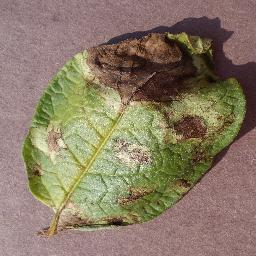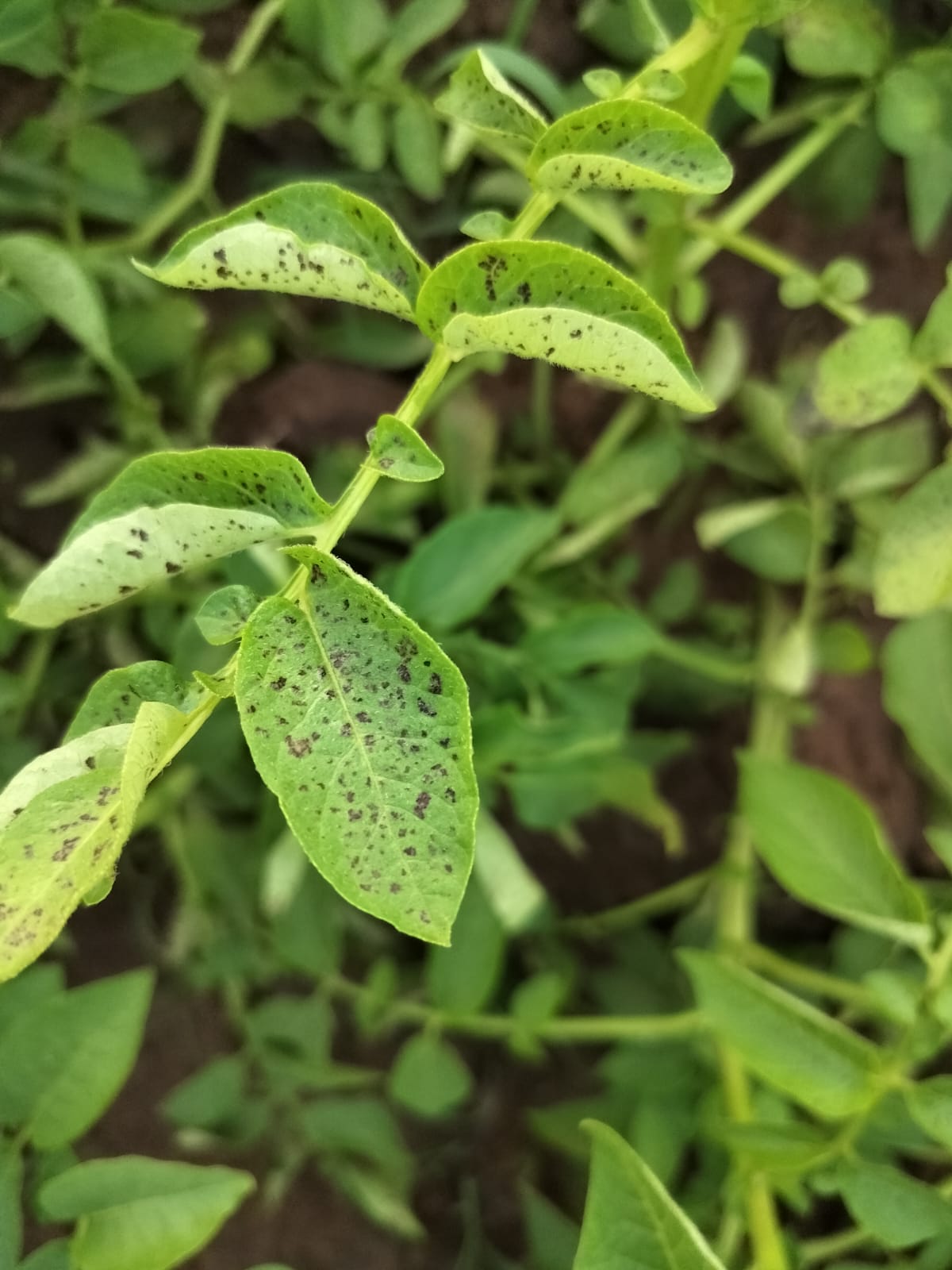
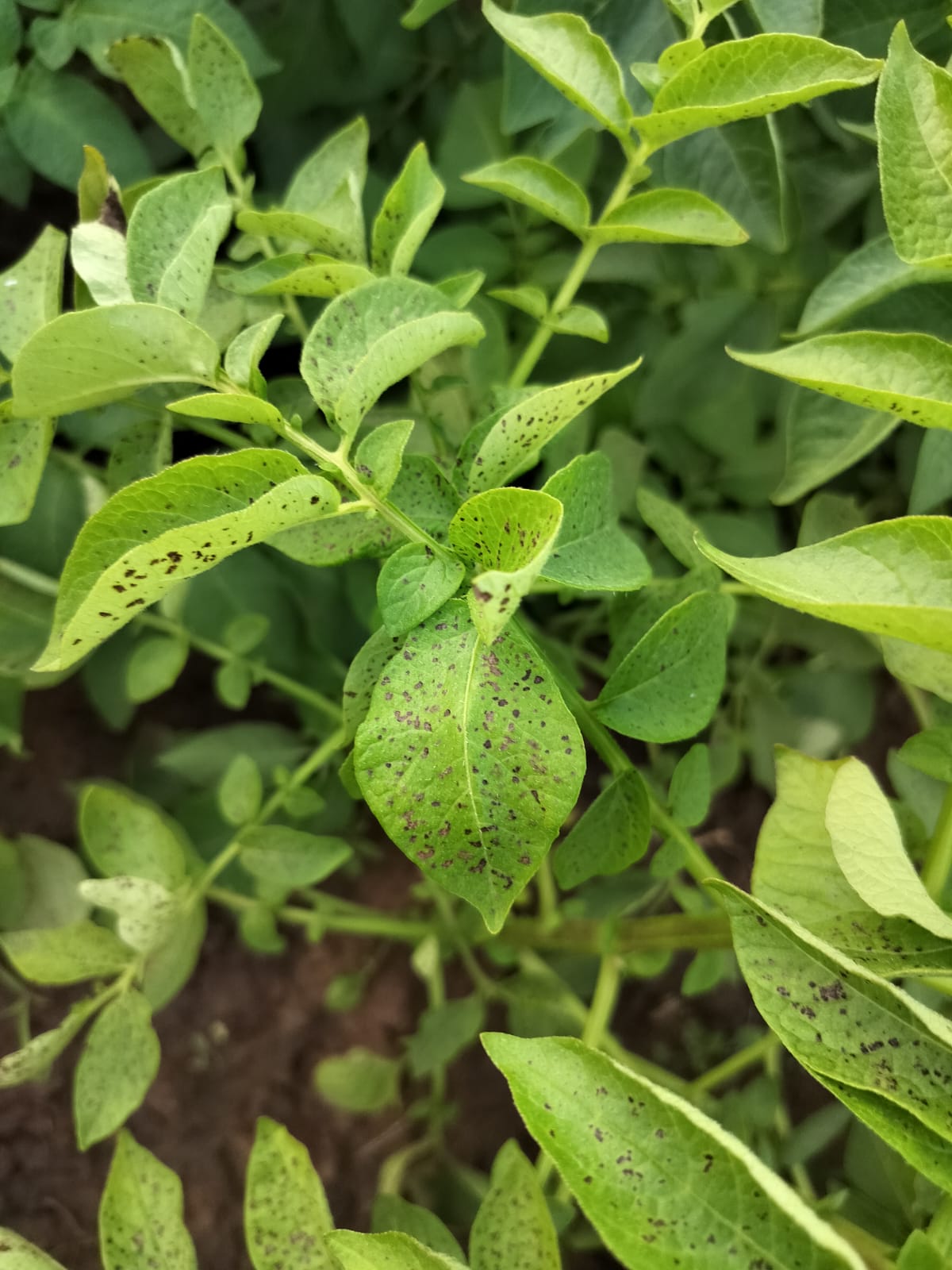
Causal agents and transmission Early blight is caused by a group of species of the fungal genus Alternaria. At least two species are responsible for early blight symptoms on potatoes, A. solani and A. alternata. These fungi overwinter in the soil, on crop debris and infected tubers. They are pathogenic to Solanaceous plants, potatoes and tomatoes, but can also be considered as saprophytes. The spores are spread by the wind and rain splashing.
The disease causes damage mainly in hot, dry climates and its effects are exacerbated in irrigated crops. Early blight develops at temperatures between 20 and 30°C and with alternating dry and humid periods. High temperatures (20-25°C) on sunny days and dew at night are favourable conditions for the development of the disease. Early blight is also considered as a sign of weakness in the plant, brought about by nutritional imbalance, drought, plant senescence, insect attacks or mechanical damage.
Management of early blight consists of general measures limiting the agronomical stresses and the factors favouring the disease:
balanced fertilisation and adequate irrigation reduce the growth stress and delay plant senescence;
several foliar fungicides, such as dithiocarbamates or chlorothalonil, used to control late blight are also effective against early blight;
use tolerant or less susceptible potato cultivars when available;
limit the inoculum by the destruction of infected crop residues, groundkeepers, and weed management and avoid planting susceptible crops such as tomatoes in the rotation;
harvest when tubers are sufficiently mature and limit the wounds at harvesting and handling to avoid tuber rots.
Need help on your farm?
Potato Intel detects diseases, pests, and disorders from satellite + field data — with management advice tailored to your variety and crop stage.
Request DemoSimilar